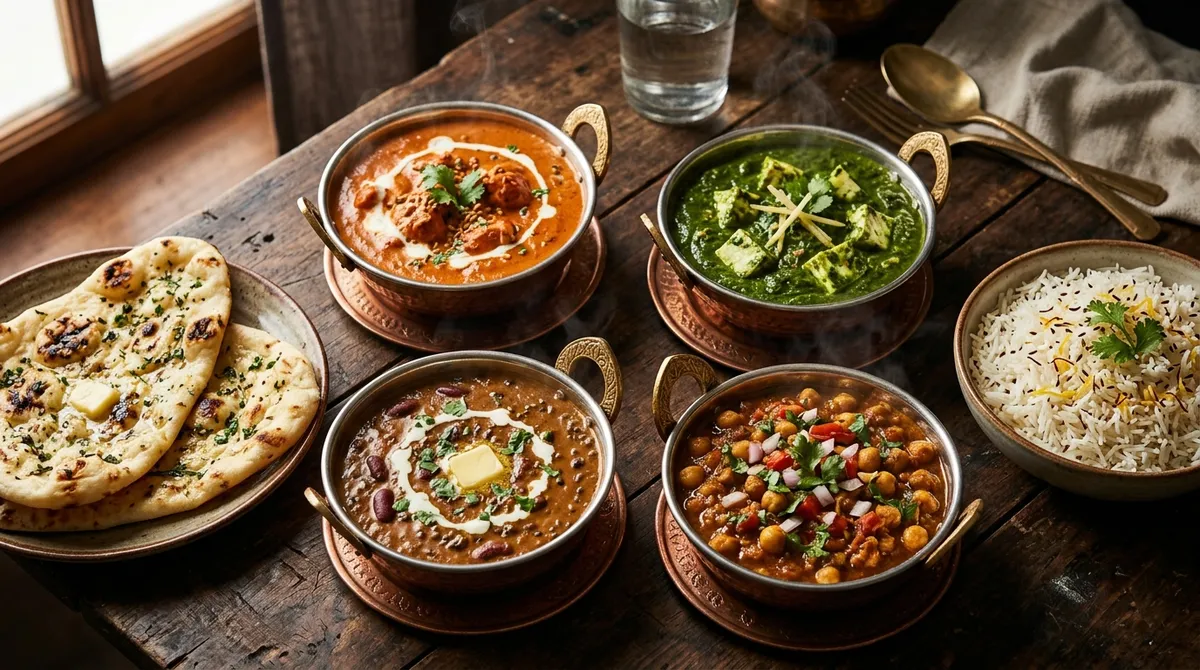
If you have ever stood in front of an Indian menu and wondered why one dish is called masala, another makhani and a third korma, you are not alone. The different types of Indian curry are not random names — each one points to a specific sauce base, a region and a way of cooking. Once you understand the handful of curry families on a North Indian menu, ordering becomes easy. This guide walks through the main types of Indian curry and tells you exactly which one to pick at Inder'n in Kastrup, whether you want something mild and creamy or deep and spiced.
We are a family-run Indian takeaway at Sirgræsvej 4, 2770 Kastrup, and we cook every curry from scratch using whole spices and our family recipes. Here is how we think about the menu in our own kitchen.
What actually makes a curry a "curry"
"Curry" is a catch-all word in English for a spiced, sauce-based dish. In an Indian kitchen we never use the word that way — we name dishes by their sauce and method. Almost every North Indian curry starts from the same foundation: onions, ginger, garlic and tomato, cooked down slowly, then built up with whole and ground spices such as cumin, coriander, cardamom and our own garam masala. What changes from one curry to the next is what we add after that base: cream, cashew, butter, yoghurt or extra chilli. That single decision is what separates the types of Indian curry from each other.
The creamy, mild curries: butter, makhani and korma
These are the curries most people start with, and for good reason — they are rich and gentle on the spice.
Butter (makhani): A smooth tomato sauce finished with butter and cream. Our Butter Chicken (119 kr for pickup) is the classic version, and we also make a Butter Lamb for those who prefer red meat. Daal Makhani (109 kr) is the vegetarian member of this family — black lentils simmered for hours until they turn silky.
Korma: The mildest curry we make. The sauce is built on cashew and cream rather than a heavy tomato base, which gives it a sweet, nutty taste and almost no heat. If you are cooking for children or trying Indian food for the first time, korma is the safest order.
Shahi Paneer: A "royal" paneer curry in a luxurious cashew-tomato sauce, rich and creamy. Our Shahi Paneer is 129 kr and is one of the most popular vegetarian picks in Kastrup.
The tangy, spiced curries: tikka masala and rogan josh
One step up in flavour and warmth, these curries keep the spice clearly present rather than smoothing it away with cream.
Tikka masala: The chicken is marinated, grilled in our tandoor, then folded into a tomato sauce with a splash of cream. The result is tangier and more spiced than butter chicken. Our Chicken Tikka Masala is 119 kr. If you want a full breakdown, we wrote a whole post on tikka masala versus butter chicken.
Rogan josh: A Kashmiri lamb curry with a deeper, more aromatic sauce — warm with spice but not built on cream. This is the one to order if you have moved past the creamy curries and want more character. Our Lamb Rogan Josh is 139 kr.
The dry-spiced and vegetable curries
Not every curry is swimming in sauce. Some of the best North Indian dishes are lighter, dry-spiced or built around a single vegetable or pulse.
Chana masala: Chickpeas cooked in a spiced curry with onion and tomato. It is naturally vegan-friendly, hearty and one of the most ordered vegetarian dishes. Our Chana Masala is 109 kr.
Palak / saag: A spinach-based curry, earthy and green, often paired with paneer. Read more about our Palak Paneer if you want the spinach-and-cheese version.
How we balance the spice in our kitchen
One thing we have learned cooking for Kastrup, Tårnby and the wider Amager neighbourhood: a curry should taste of its spices, not just burn. In our kitchen we toast and grind whole spices for each batch rather than relying on pre-made powders, and we hold back the chilli a little so the aromatics — cardamom, clove, cinnamon — come through. If you want a dish hotter or milder, just tell us when you order; we cook to order and can adjust most curries. We also pack each curry separately from the rice and naan so nothing goes soggy on the way to you.
Which type of Indian curry should you order?
A simple way to choose between the types of Indian curry:
- Never had Indian food? Start with korma or butter chicken — mild and creamy.
- Want flavour with a little warmth? Chicken tikka masala.
- Ready for something deeper? Lamb rogan josh.
- Vegetarian? Shahi paneer, daal makhani, chana masala or palak paneer.
Whatever you pick, you can see the full line-up on our menu and order online in a couple of minutes. Order pickup via Dully or check Wolt and Uber Eats for delivery to your address, current times and fees. Inder'n is at Sirgræsvej 4, 2770 Kastrup — call us on +45 50 29 13 71 — and we are open Tuesday to Sunday, 16:00–20:30 (closed Mondays).
Frequently asked questions
What are the main types of Indian curry?
The most common North Indian curries are masala (a spiced tomato-cream sauce), makhani or butter (rich tomato and butter), korma (mild cashew and cream), rogan josh (a deeper Kashmiri lamb curry) and dry-spiced dishes like chana masala. At Inder'n in Kastrup our mains run from 109 kr.
Which Indian curry is the mildest?
Korma and butter chicken are the mildest — both use cream and cashew to soften the spice, which makes them a good first order. Tikka masala sits a step up, and rogan josh has the most warmth.
What is the difference between butter chicken and tikka masala?
Butter chicken has a sweeter, butter-and-tomato sauce, while tikka masala is tangier with more spice in the tomato base. Both start from grilled, marinated chicken. Tikka masala is 119 kr and butter chicken is 119 kr for pickup at Inder'n.
Where can I order Indian curry in Kastrup?
Order pickup via Dully, or delivery via Wolt or Uber Eats. Check your address, current delivery time and fees in the app before ordering. Call +45 50 29 13 71 or order at indern.dk. Inder'n is open Tuesday to Sunday, 16:00–20:30 (closed Mondays).