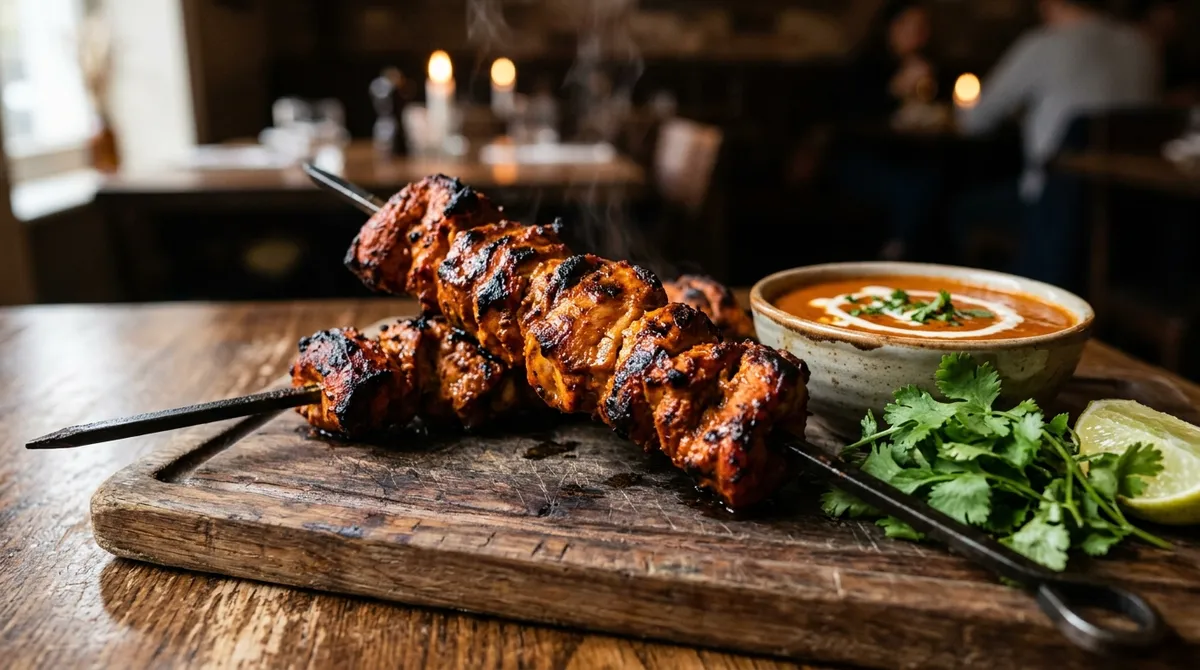
If you have ever scrolled a menu in Kastrup and wondered what is tikka, the answer is simpler than most people expect. Tikka is not a sauce, not a spice blend and not a region. It is a shape and a method: bite-sized pieces of meat or paneer, marinated and cooked over dry, direct heat. Everything else — the creamy sauce, the tomato, the colour people recognise — comes afterwards. In our kitchen at Sirgræsvej 4 in Kastrup we make tikka the same way our family has always made it, and it is the first half of the most-ordered dish on our menu.
What does "tikka" actually mean?
Tikka comes from Punjabi and Urdu, and it translates roughly as "piece" or "chunk". That is the whole idea. Where a curry starts with a slow-built gravy, tikka starts with the protein itself: cut into even pieces, sat in a yoghurt-and-spice marinade, then cooked hot and fast so the outside chars while the inside stays soft.
The marinade does two jobs. The acidity and enzymes in yoghurt tenderise the meat, and the fat carries the fat-soluble spices — chilli, turmeric, cumin, coriander, garam masala — deep into the surface. Ginger and garlic go in as a paste rather than chopped, so they coat rather than sit in lumps. Give it long enough and the spice is not a coating any more; it is part of the meat.
This is North Indian cooking, specifically Punjabi. It belongs to the same tradition as the tandoor, the clay oven that gives tandoori chicken its name. If you want the longer version of that story, we wrote about the tandoor oven and why it changes the food.
Tikka vs. tikka masala — the difference people get wrong
Here is where most confusion sits. Tikka is the grilled, marinated pieces on their own — dry, charred, eaten with a squeeze of lemon and maybe raw onion. Tikka masala is those same pieces finished in a masala: a sauce of onion, tomato, ginger, garlic and ground spices, loosened with a little cream.
So Chicken Tikka Masala is a two-stage dish, not a one-pot curry. If a kitchen skips the first stage and simply simmers raw chicken in sauce, you get something that tastes flat — pleasant, but missing the smoky edge that makes the dish worth ordering. That char is the entire point. "Masala" itself just means the spice mixture; we explained that word in more detail in our guide to what masala means.
It also explains why Chicken Tikka Masala and Butter Chicken taste related but not identical. Both are creamy and tomato-based. Butter Chicken leans sweeter, rounder and milder; tikka masala keeps more spice and more grill flavour. We compared the two side by side in tikka masala vs. butter chicken.
How we make chicken tikka at Inder'n
In our kitchen the chicken is cut, marinated and rested well before service starts, because a short marinade is a wasted one. We use thick yoghurt so the mixture clings instead of running off, and we keep the chilli honest rather than punishing — most of our customers in Kastrup and Tårnby order at the mild-to-medium end, and a dish nobody can finish is a dish nobody reorders.
The colour is another thing worth being straight about. Deep red tikka in photographs is usually food colouring. Ours comes from chilli, turmeric and the char itself, so it looks more rust than neon. That is what real spice looks like.
The pieces are grilled until the edges catch, then folded into the masala at the end rather than boiled in it. Cooking them through in the sauce would undo the texture we just built. When the order goes out for delivery we pack sauce and bread separately, because naan steaming inside a sealed container is how good bread turns soft on a fifteen-minute drive across Amager.
What to order with tikka masala in Kastrup
Chicken Tikka Masala costs 119 kr at Inder'n. It is designed to be eaten with something starchy underneath, and the two standard choices are:
- Basmati Ris — 25 kr. Neutral, separate grains, soaks up sauce without competing with it.
- Garlic Naan — 17 kr. Soft flatbread for scooping. If you only order one side, order this one.
For two people sharing, a common order is one tikka masala, one vegetarian dish — Daal Makhani at 109 kr is the usual partner — plus rice and two naan. That lands around 290 kr for the table and gives you two sauces instead of one. If you are ordering for a group, add a starter: Samosa or Pakora, both 49 kr.
You can see the full list on our menu and place an order at indern.dk/bestil. We are at Sirgræsvej 4, 2770 Kastrup — a few minutes from Copenhagen Airport (CPH) and the airport hotels, with delivery availability for Tårnby, Amager and Dragør checked by entering your address in Wolt or Uber Eats. Call +45 50 29 13 71 if you want to ask about spice level or allergens before you order.
Inder'n is open Tuesday to Sunday, 16:00–20:30 (closed Mondays). Order pickup via Dully or check Wolt and Uber Eats for delivery to your address, current times and fees.
Frequently asked questions
What does tikka mean?
Tikka means "piece" or "chunk" in Punjabi and Urdu. It refers to bite-sized pieces of meat or paneer that are marinated in yoghurt and spices, then cooked over dry, direct heat.
What is the difference between tikka and tikka masala?
Tikka is the marinated, grilled pieces served dry. Tikka masala is those same pieces finished in a masala sauce made from onion, tomato, ginger, garlic and ground spices with a little cream.
Is Chicken Tikka Masala spicy?
At Inder'n it is mild to medium — warm and aromatic rather than hot. Call +45 50 29 13 71 before ordering if you want to discuss spice level.
How much does Chicken Tikka Masala cost at Inder'n in Kastrup?
Chicken Tikka Masala costs 119 kr. Basmati rice is 25 kr and garlic naan is 17 kr. Order at indern.dk or call +45 50 29 13 71. Inder'n is open Tuesday to Sunday, 16:00–20:30 (closed Mondays).