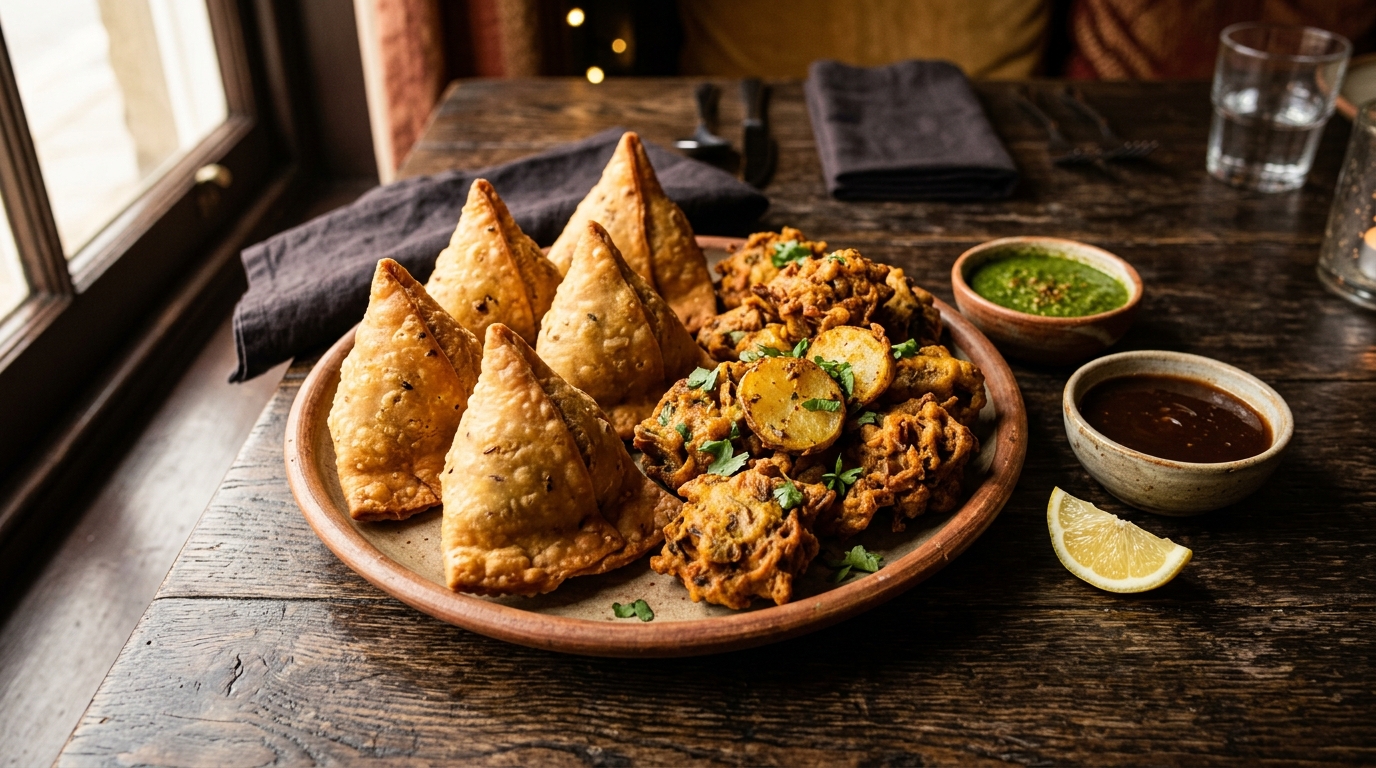
Samosa vs pakora is the question we hear most often at the counter on Sirgræsvej, usually from someone standing in front of the menu with a curry already decided and one starter slot left. Both cost 49 kr, both are vegan on our menu, and both come out of the fryer when your order comes in. They are still very different things to eat. This guide explains the difference so you can pick the right one, or order both, which is what we usually recommend.
The short answer: samosa vs pakora
If you want something filling with a proper bite, order the samosa. If you want something light, crunchy and easy to share, order the pakora. Here is the comparison in four lines:
- Samosa (2 pieces, 49 kr): a triangle of pastry filled with spiced potato and peas, fried until the shell is crisp.
- Pakora (3 pieces, 49 kr): slices of potato coated in a spiced chickpea-flour batter, fried until deep gold.
- Texture: samosa is crisp outside and soft, dense inside. Pakora is crunchy all the way through, with a lighter bite.
- Best for: samosa as a small meal or a solid starter for one. Pakora as a shared snack or a lighter opener.
What is a samosa?
A samosa is a fried pastry parcel, folded into a triangle around a filling. In North India, and in the Punjabi cooking our kitchen is based on, the classic filling is potato and green peas seasoned with cumin, ginger and green chilli. That is the version on our menu. The shell does the heavy lifting: it has to stay crisp on the outside while the filling inside stays soft and hot, which is why a samosa travels better than most fried food.
Because the filling is dense and the shell is thicker, a samosa eats like a small meal. Two pieces is enough to take the edge off hunger before a curry arrives, or to carry you through a lighter dinner if you pair them with a Mango Lassi. We have a longer write-up on the dish in our samosa guide.
What is pakora?
Pakora is a fritter. You take a vegetable, dip it in a batter made from besan (chickpea flour) and spices, and fry it. There is no pastry shell. The batter itself becomes the crust, which is why pakora has that nutty, savoury flavour you do not get from wheat flour. Ours is the potato version: potato slices fully coated in seasoned batter, three pieces per portion.
Pakora is the better choice when the table is sharing. Three pieces split between two people is a proper opener, and the bite is lighter, so it does not take up room you want for the main course. More detail on how it is made is in our pakora guide.
Which one travels better as takeaway?
This matters more than people think, because fried food is at its best in the first ten minutes. In our kitchen we fry both when your order comes in, so the clock starts when the bag is closed. A few things we have learned from packing food for pickup on Sirgræsvej:
- The samosa holds its crunch a little longer, because the pastry shell is thicker and the filling is dense.
- The pakora is at its crunchiest straight from the oil, so eat it first if you have a short drive home.
- If the food has gone soft by the time you sit down, put it in a hot oven for a few minutes rather than the microwave. Our reheating guide explains how.
The simplest way to get the best result is to collect from us in Kastrup and eat soon after. If you are ordering through Wolt or Uber Eats, delivery times and fees are shown at checkout.
What to pair with each
Both starters work with every curry on the menu, but some pairings are better than others:
- Samosa with Butter Chicken (119 kr): the rich tomato-and-butter sauce is a good contrast to a crisp, mildly spiced shell. Add a Garlic Naan (17 kr).
- Pakora with Daal Makhani (109 kr): the slow-cooked black lentils are soft and creamy, so the crunch of the pakora gives the meal some texture.
- Samosa with Chana Masala (109 kr): a fully vegan dinner. The chickpea curry is tangy and sharp, and the samosa fills it out.
- Pakora with Palak Party (from 139 kr): creamy spinach sauce with your choice of protein, plus something fried and crunchy on the side.
Drinks matter too. A Mango Lassi (35 kr) cools down the spice, and a Cobra or Kingfisher (39 kr) goes well with fried starters. We cover that in our pairing guide.
A dinner for two, with the numbers
If you cannot decide, order both starters. Here is a simple dinner for two from the current menu: samosa (49 kr), pakora (49 kr), Butter Chicken (119 kr), Chana Masala (109 kr), two naan (34 kr) and a portion of basmati rice (25 kr). The total is 385 kr, or roughly 190 kr per person, before any pickup or delivery fees. Prices on the menu include VAT, and you can check the full list on our menu page.
How to order from Inder'n in Kastrup
Inder'n is a family-run Indian takeaway at Sirgræsvej 4, 2770 Kastrup, close to Copenhagen Airport (CPH) and easy to reach from Tårnby and Amager. Inder'n is open Tuesday to Sunday, 16:00–20:30 (closed Mondays). You can order pickup online at indern.dk, call us on +45 50 29 13 71, or find us on Wolt and Uber Eats for delivery. We do not have a dining room, so everything is packed to go.
If you have an allergy or a specific dietary need, call us before you order and tell us what it is. Please do not rely on this article for allergen information.
Frequently asked questions
What is the difference between samosa and pakora?
A samosa is a pastry triangle filled with spiced potato and peas. Pakora is a vegetable fritter, here potato, coated in a spiced chickpea-flour batter. The samosa is denser and more filling, and the pakora is lighter and crunchier.
Are samosa and pakora vegan at Inder'n?
Both are listed as vegan on our menu. If you have an allergy, call +45 50 29 13 71 before ordering.
How much do samosa and pakora cost?
Samosa (2 pieces) and pakora (3 pieces) both cost 49 kr each on our current menu. Prices include VAT, and fees may be added at checkout.
When can I order samosa and pakora in Kastrup?
Inder'n is open Tuesday to Sunday, 16:00–20:30 (closed Mondays). Pickup is at Sirgræsvej 4, 2770 Kastrup, and you can order at indern.dk.